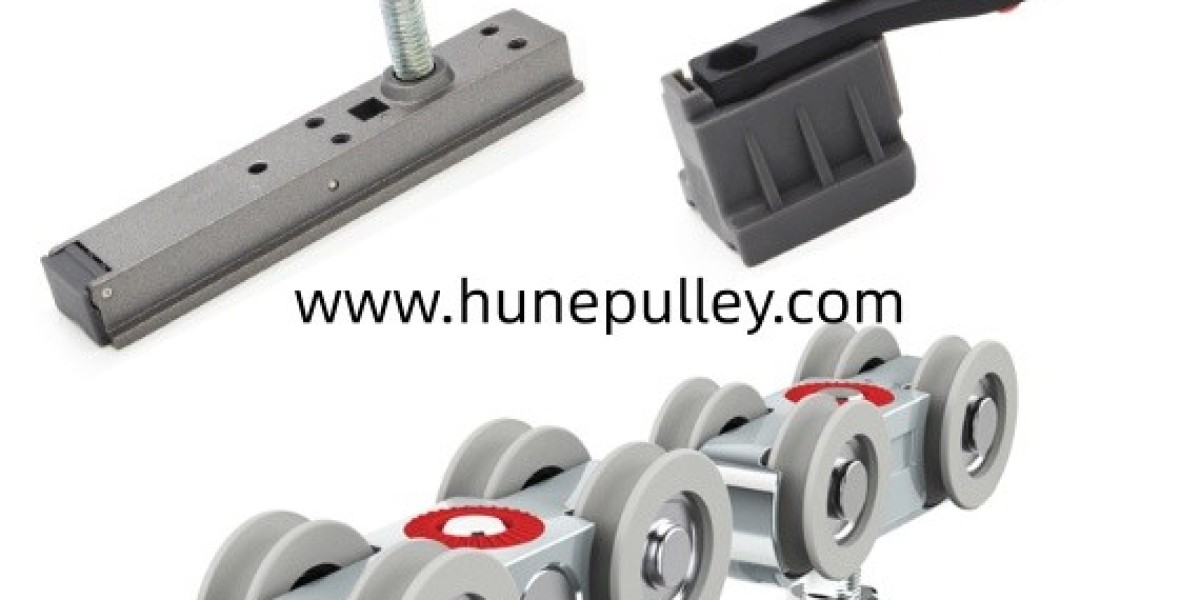

Sliding doors have become an important feature in residential, commercial, and industrial environments. Their practical structure helps save space while creating flexible connections between different areas. As demand for functional door systems continues to develop, choosing a reliable Sliding Door Roller Factory becomes an important consideration for manufacturers and distributors. With attention to product development and manufacturing requirements, Hunepulley provides sliding door roller solutions designed to support different installation environments and everyday applications.
The performance of a sliding door depends on more than its visible panel and frame. The roller assembly plays an essential role in determining how smoothly the door travels along its track. A properly designed roller helps distribute weight, maintain movement stability, and reduce unnecessary friction during operation. These details influence the overall user experience and contribute to the practical value of the complete door system.
Material selection is another important part of roller manufacturing. Different applications may require different combinations of strength, flexibility, wear resistance, and surface characteristics. Metal components can provide structural support, while engineering plastics offer useful properties for applications where reduced noise and smooth contact are important. Selecting appropriate materials according to the intended environment helps manufacturers create products that meet specific installation requirements.
Product structure also deserves careful attention. Roller diameter, bearing configuration, mounting design, and wheel profile can all influence compatibility with different sliding door tracks. When these elements are properly coordinated, the assembly can move more consistently and maintain suitable contact with the track. This is particularly relevant for wardrobe doors, cabinet systems, interior partitions, and other furniture applications where convenient operation is part of the overall design.
For door manufacturers, product consistency is an important consideration throughout the production process. Components need to match their intended specifications and work appropriately with related hardware. Careful attention to manufacturing procedures, assembly details, and product inspection can help reduce compatibility concerns during installation. It also allows manufacturers to develop door systems with a more predictable operating experience.
Customization can provide additional flexibility when standard components do not fully match a particular project. Different door structures may call for adjustments in wheel materials, bearing arrangements, bracket configurations, or installation methods. Working with a manufacturer that understands these requirements can make product selection and development more straightforward. Clear communication about track dimensions, door weight, operating conditions, and installation preferences helps identify suitable component designs.
Another consideration is the changing direction of interior architecture. Contemporary spaces increasingly incorporate concealed hardware, minimalist frames, and flexible room arrangements. Sliding doors support these design preferences by combining practical movement with a clean appearance. Roller components must therefore work effectively within different structural arrangements without compromising the intended visual style.
Maintenance and long-term usability should also be considered during product selection. Appropriate roller construction can help support consistent movement, while suitable installation and routine inspection contribute to the operating condition of the complete system. Understanding the relationship between rollers, tracks, bearings, and door panels makes it easier for manufacturers and installers to create practical hardware combinations.
A thoughtful approach to manufacturing involves more than producing individual components. It requires an understanding of how each part contributes to the complete door system. Product development, material coordination, structural design, and application requirements all influence the final result. For distributors and door manufacturers, these considerations can help establish a more efficient sourcing process and support different market requirements.
As sliding door applications continue to evolve, hardware selection remains an important part of product planning. Whether the project involves furniture manufacturing, wardrobe construction, or interior partition systems, suitable roller components can make a meaningful difference to everyday operation.
Every smooth-moving door begins with details that are easy to overlook. Take a closer look at the possibilities waiting for your next hardware project. Visit https://www.hunepulley.com/product/ and browse the available product solutions, where your next sliding door design could find its missing mechanical connection.