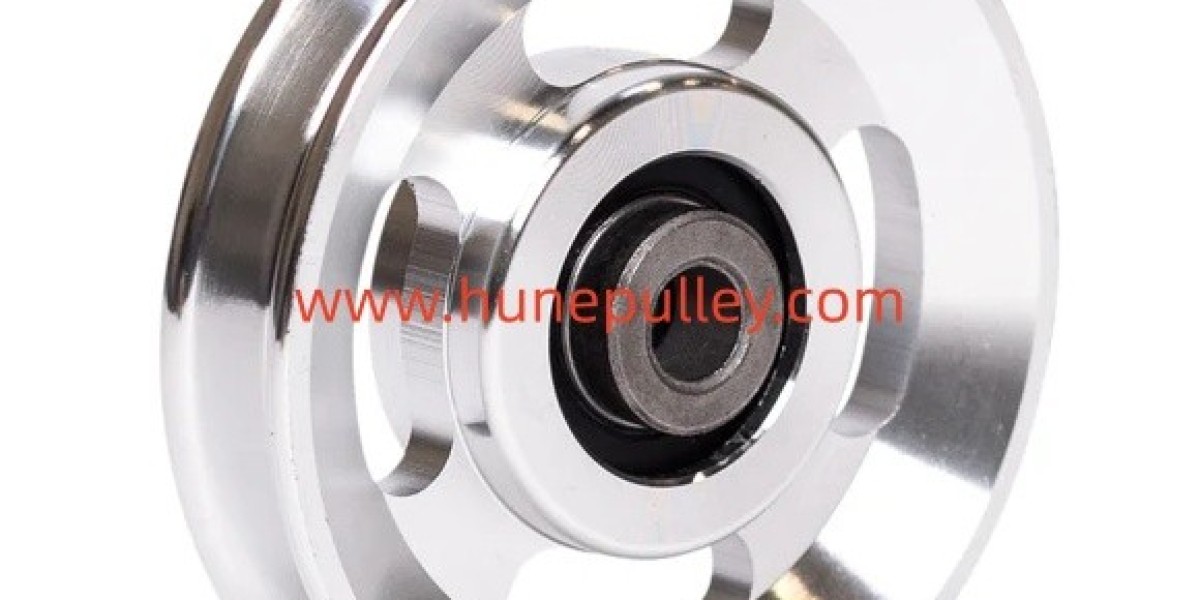

Mechanical systems depend on the coordinated movement of individual components. From industrial equipment and sliding structures to automated machinery, reliable motion requires careful attention to friction, alignment, and load distribution. Bearing and Pulley solutions from Hunepulley reflect the importance of combining functional component design with practical manufacturing considerations, helping equipment manufacturers and distributors address different mechanical application requirements.
A bearing plays an important role in supporting rotational or linear movement. By reducing friction between moving parts, it helps equipment operate with smoother motion and controlled interaction between components. A pulley, meanwhile, provides a guiding or supporting structure for belts, cables, or other moving elements, depending on its intended application. When these components are selected appropriately, they can contribute to the coordinated operation of a mechanical assembly.
Material selection is an important part of component development. Different applications may require different combinations of strength, wear resistance, weight, and surface characteristics. Metal components may be suitable for particular mechanical environments, while engineering plastics can offer alternative properties for applications where weight, noise, or surface interaction deserves attention. Understanding the working environment helps buyers identify suitable material options.
Structural design also influences component performance. Bearing dimensions, groove profiles, wheel shapes, and installation arrangements need to correspond with the equipment in which they will be used. Even small differences in component geometry can affect alignment and movement. Manufacturers therefore need to consider application requirements during the design and production stages.
For sliding systems, pulley wheels are commonly used to support controlled movement along a track. They can be found in furniture fittings, wardrobe doors, sliding doors, and various industrial structures. Their design may involve different groove profiles, bearing arrangements, and mounting methods. Choosing an appropriate configuration helps ensure that the component fits the intended track and installation structure.
In industrial equipment, bearings and pulleys may also work together as part of a larger transmission or guiding system. Their interaction requires attention to rotation, positioning, surface contact, and maintenance conditions. Equipment designers should consider the surrounding mechanical structure rather than evaluating each component independently. This approach can help reduce compatibility problems during installation.
For wholesale buyers and equipment manufacturers, product variety is another important consideration. Different projects may require customized dimensions, material choices, or structural configurations. Access to clear product specifications helps purchasing teams compare available options and communicate their requirements accurately. It also supports smoother discussions between suppliers, engineering teams, and distributors.
Manufacturing consistency deserves equal attention. Raw material preparation, machining, molding, assembly, and inspection all contribute to the finished component. An organized production process helps maintain attention to dimensional requirements and product details. For buyers handling ongoing supply arrangements, understanding manufacturing procedures can also provide useful context when evaluating potential cooperation.
Maintenance should be considered during product selection as well. Mechanical components operate within specific environments, and dust, moisture, friction, and installation conditions may influence their service requirements. Appropriate product selection, correct installation, and regular inspection can help equipment operators manage component wear and maintain smooth mechanical movement.
As machinery and furniture systems continue to evolve, component manufacturers have opportunities to respond through practical engineering and adaptable product development. Careful attention to materials, geometry, and application compatibility helps create components that serve clearly defined mechanical purposes.
A mechanical system is built from details that work together, and choosing the right component can shape how the entire assembly moves. Give your next sourcing project a fresh starting point by visiting https://www.hunepulley.com/product/ . Browse the product possibilities, examine different component designs, and find a new direction for your next mechanical project.






