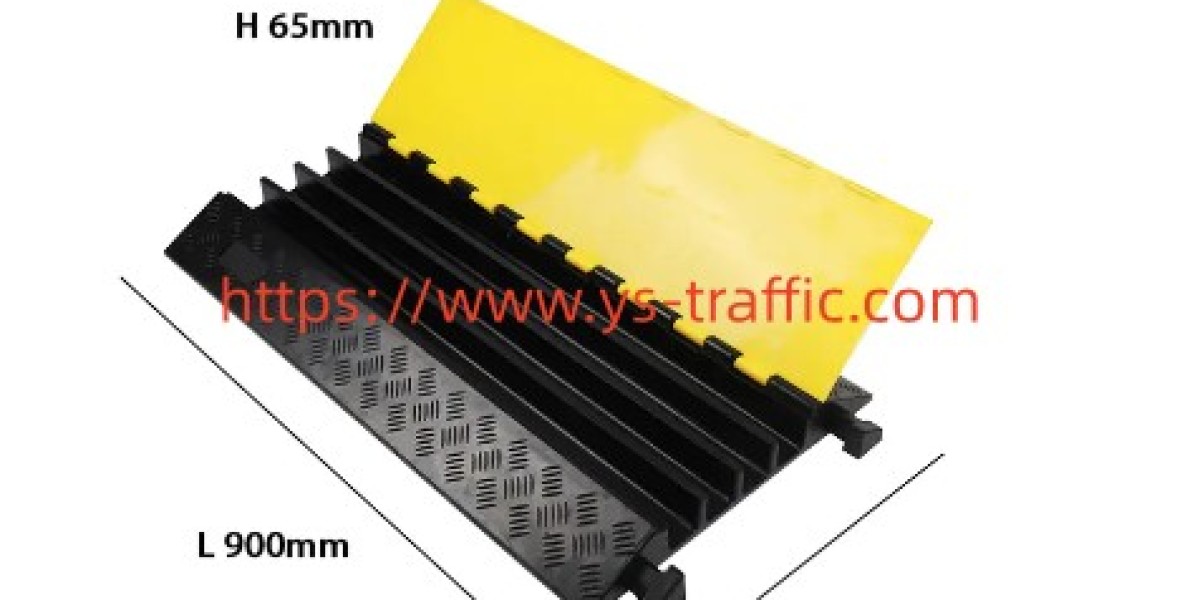

Cable Ramp selection should begin with the actual conditions of the installation site rather than the product photograph or quoted price. For electrical contractors, event organizers, warehouse operators, distributors, and importers, the purchasing process involves route planning, line dimensions, vehicle movement, ground conditions, and product construction. A suitable configuration can help organize exposed wiring while providing a protective crossing for pedestrians and vehicles. As a rubber traffic equipment manufacturer, ys-traffic provides different product configurations for commercial and industrial applications.
Study the Installation Location
Before comparing product models, buyers should identify where the lines begin, where they need to go, and which areas they must cross. A temporary event installation may involve several power and signal connections, while a warehouse may have fixed routes around machinery and working areas.
Prepare a simple site drawing that shows starting points, destinations, turns, and crossing areas. This information helps determine the required product length and the number of sections needed.
The surrounding environment also matters. Indoor facilities, outdoor work areas, construction entrances, and public event spaces may have different requirements. Buyers should consider pedestrian movement, vehicle access, available floor space, and whether the installation will remain in one position or need to be moved regularly.
Measure the Lines and Available Internal Space
The number of lines alone does not determine the required channel configuration. Their outside diameter, shape, grouping, and routing direction also influence the available space.
Buyers should measure each line and record how many need to pass through the same section. Avoid assuming that several small conductors and one large connection require identical internal dimensions.
Ask the manufacturer for the channel width, internal height, and overall product measurements. Compare these specifications with the actual dimensions before ordering. The contents should fit naturally without being squeezed into an unsuitable space or interfering with the cover.
For complicated installations, a drawing showing the proposed arrangement can make communication easier and help the supplier review the requested configuration.
Compare Different Structural Configurations
Different projects may require single-channel, two-channel, or multi-channel structures. A single passage may suit one group of lines, while multiple passages can help separate connections serving different equipment or destinations.
For example, an event installation may need separate routes for power and signal connections. An industrial facility may need several passages leading toward different machines.
When comparing structures, consider whether separation is useful for identification, inspection, and future maintenance. ys-traffic offers different product arrangements that buyers can evaluate according to their project measurements and intended applications.
Before confirming an order, check the internal layout, external dimensions, and available section combinations rather than relying only on the number of passages shown in a product photograph.
Examine Material and Surface Construction
Material composition influences flexibility, weight, handling, and suitability for the working environment. Rubber is commonly used in floor-level protection products because it provides a flexible structure for different installation settings. Some configurations may also combine rubber with other materials.
Buyers should ask about the material composition, manufacturing details, and maintenance requirements. For outdoor applications, consider exposure to sunlight, rain, moisture, and changing temperatures.
The upper surface deserves attention as well. A textured design can provide contact between footwear or wheels and the product surface. Contrasting yellow and black sections may help make the installation more noticeable in working areas.
Request clear photographs, technical drawings, or samples when appearance and surface construction are important to the purchasing decision.
Match Load Requirements With Traffic Conditions
The expected traffic determines which structural specifications need closer review. A pedestrian walkway has different operating conditions from a warehouse route used by loaded carts or vehicles.
Before purchasing, identify the types of traffic that will pass over the installed equipment. Ask the supplier for applicable load information and confirm whether the proposed model is intended for the planned environment.
Avoid relying on general descriptions alone. Product dimensions, material construction, supporting surface, and installation method should be considered together.
Buyers should also check whether the ground is flat and stable. Uneven placement can affect how connected sections sit during use, so the condition of the installation area should be assessed before work begins.
Review Connections and Installation Accessories
For longer routes, individual sections may need to connect into a continuous arrangement. Interlocking structures can help join neighboring units, but compatibility should be confirmed before purchasing several pieces.
Check the connection shape, overall height, internal alignment, and direction of each section. If the planned route includes corners, ask whether compatible corner pieces or directional configurations are available.
Installation accessories also deserve attention. Confirm whether mounting holes, fixing hardware, or other components are included, and ask which ground conditions are suitable. Clear installation instructions can help contractors prepare the site and organize assembly work.
Prepare Order Information Before Contacting the Manufacturer
Once the technical requirements are clear, buyers can prepare a detailed inquiry. Include the intended application, line measurements, channel arrangement, required quantity, product dimensions, preferred color, and delivery destination.
Importers and distributors should also discuss customization options, sample arrangements, packaging methods, inspection procedures, and estimated production schedules. For repeat purchases, keep a record of approved specifications so that later orders can refer to the same product details.
At ys-traffic, buyers can share drawings, photographs, and estimated quantities for a product discussion. Providing complete project information helps the manufacturing team understand the requested configuration and prepare relevant details for review.For contractors, distributors, and purchasing managers, a careful selection process starts with understanding the installation route and the lines that need protection. Internal dimensions, material construction, traffic conditions, connection design, and fixing requirements should all be checked before confirming an order. If you are planning an event, warehouse, construction, or commercial installation, contact ys-traffic to discuss your specifications and available configurations. You can review the company's product range and submit an inquiry at https://www.ys-traffic.com/