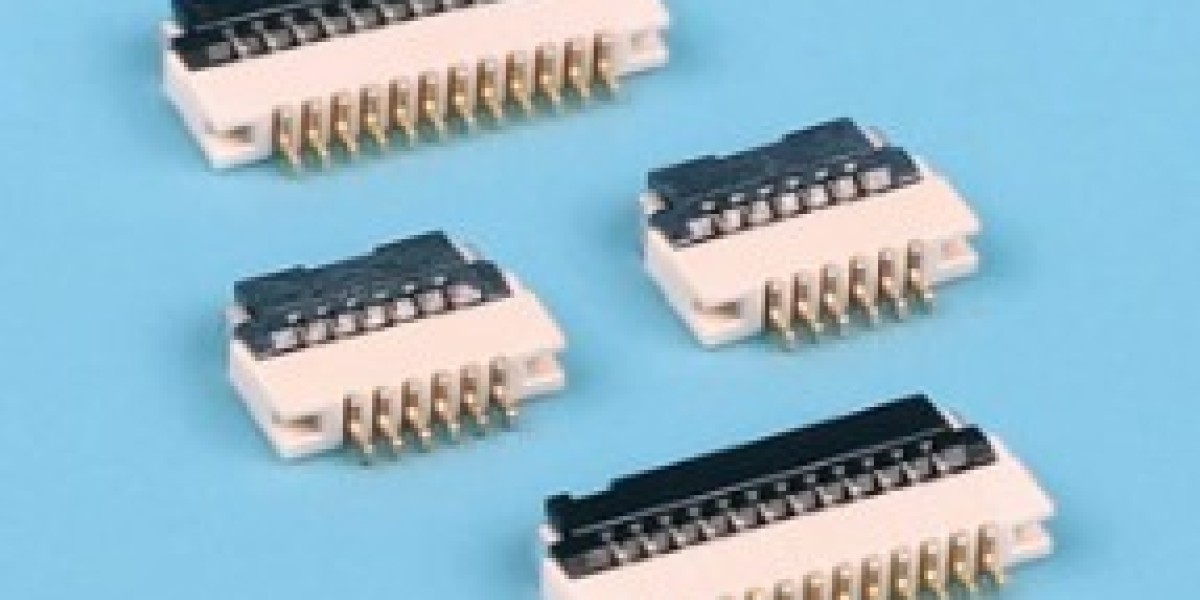

Flat Connector selection deserves careful attention because a small mismatch between a flexible circuit and its mating component can create installation delays, electrical contact issues, or unnecessary design changes. Buyers should review the complete connection specification instead of choosing a part based only on its appearance or general product category. A structured purchasing checklist helps engineering and sourcing teams communicate their requirements clearly before ordering.
Match the Contact Pitch and Position Count
Begin by comparing the contact pitch with the spacing of the conductive traces on the flexible cable. These measurements must correspond to the selected product specification. A similar overall width does not necessarily mean that two components are compatible.
The number of positions also needs to match the circuit design. Buyers should count the actual conductive fingers and confirm the required signal, power, and grounding connections. If the project involves a customized cable, provide its drawing to the manufacturer for review.
It is useful to confirm these details together rather than treating pitch and position count as separate purchasing decisions. This reduces the possibility of ordering a part that cannot accommodate the intended cable.
Confirm Cable Thickness and Contact Orientation
Cable thickness affects how the flexible end fits into the contact area. If the cable is outside the permitted thickness range, insertion and retention may not work as expected. Buyers should therefore check the cable drawing and compare its specifications with the product documentation.
Contact orientation is another detail that deserves attention. Depending on the design, the conductive surface may need to face upward or downward during insertion. Selecting the wrong contact arrangement can prevent proper electrical engagement even when the pitch and position count match.
Before confirming an order, ask the supplier to identify the compatible contact direction and insertion arrangement. A drawing showing the cable entry and contact position can make this review easier.
Choose a Locking Structure for the Assembly Process
Different locking structures serve different installation requirements. A zero-insertion-force design generally uses an actuator that opens for cable insertion and closes to secure the connection. Other structures may rely on a different insertion and retention approach.
Buyers should consider how often the cable will be installed or removed. Equipment that requires service access may need a locking mechanism that technicians can operate conveniently. For products assembled once during manufacturing, the required handling method may be different.
Also check whether there is enough space to open and close the actuator after the component is mounted. Restricted access can make an otherwise suitable design difficult to assemble or maintain.
Review Mounting Style and PCB Layout
The mounting method must fit the production process and the circuit layout. Surface-mount options are commonly considered for automated assembly, while other termination styles may suit different equipment structures.
Check the recommended footprint, pad arrangement, component height, and cable exit direction. The available clearance around the housing should allow the cable to enter without sharp bending or interference from nearby parts.
Buyers should also consider the location of other components, enclosure walls, and access points. Sharing a PCB layout or mechanical drawing with the manufacturer can help identify possible conflicts before the design is finalized.
Evaluate Electrical and Environmental Requirements
Electrical ratings should be reviewed according to the actual application. Relevant details may include rated current, voltage, contact resistance, insulation performance, and signal transmission requirements.
The operating environment also matters. Temperature variation, vibration, humidity, and repeated connection cycles may influence material and structural decisions. Buyers should explain whether the equipment will be used indoors, outdoors, or in a setting with frequent movement.
For applications involving sensitive data signals, the surrounding circuit design and connection layout should be reviewed together. The manufacturer can use this information to discuss suitable product specifications and any additional validation that may be required.
Request Samples and Check Technical Documents
Sample evaluation allows buyers to check practical compatibility before arranging volume production. Use the actual flexible cable and intended PCB during testing whenever possible. Review insertion, locking operation, alignment, electrical continuity, and removal procedures.
Technical documents should also be part of the purchasing review. Request dimension drawings, recommended land patterns, material details, and applicable product specifications. These records help engineering teams verify the design and provide a reference for incoming inspection.
If a sample does not fit as expected, record the issue with measurements or photographs. Specific feedback helps the supplier understand whether the concern relates to cable dimensions, installation direction, or the selected structure.
Assess the Manufacturer Before Placing an Order
A purchasing decision should include an assessment of the supplier's communication and production arrangements. Ask how specifications are reviewed, how changes are confirmed, and which inspection steps are used during manufacturing.
Buyers should also clarify sample lead time, order quantity, packaging, delivery arrangements, and procedures for repeat orders. These details are important when the component will be used in a scheduled assembly program.wendaelectronics provides electronic interconnection products and supports customer discussions about product specifications and project requirements. Buyers can submit drawings, cable details, and application information to help the team review suitable options. For product information and further communication about your project, visit https://www.wendaelectronics.com/ and share your purchasing requirements with the manufacturer.






