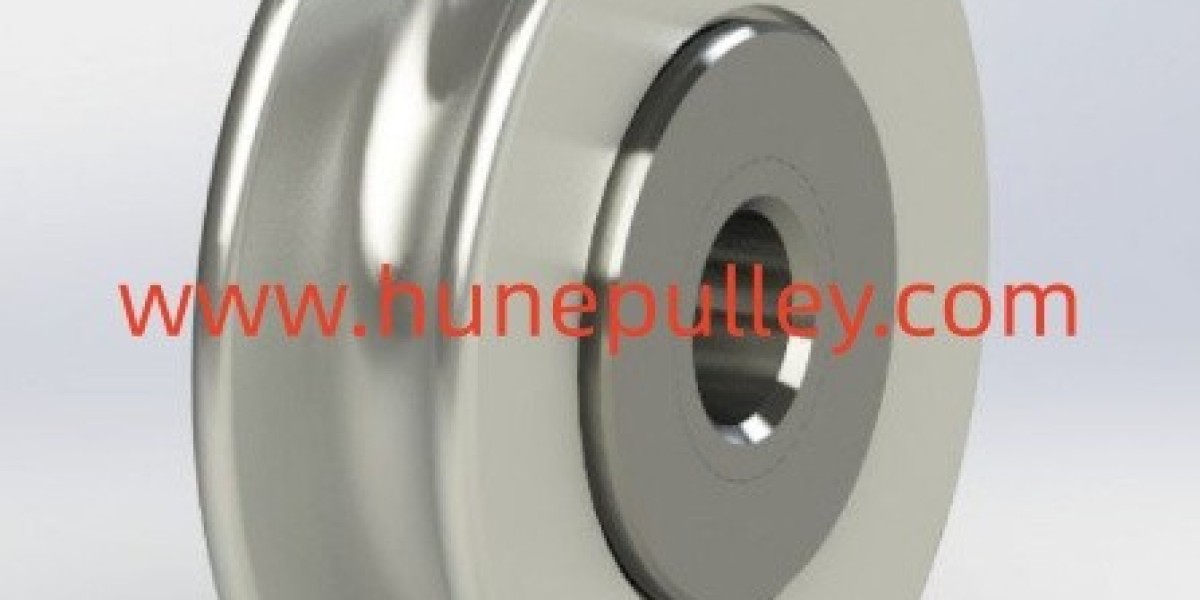

Precision in mechanical movement often depends on the relationship between a wheel and the track it follows. In applications where directional guidance and stable contact are important, a V Groove Roller from Hunepulley provides a component design worth considering. Its distinctive wheel profile is intended to work with compatible V-shaped tracks, making it relevant to equipment manufacturers, furniture producers, and hardware distributors seeking suitable rolling solutions for different mechanical structures.
The defining feature of this roller is its angled groove. Unlike a flat wheel that relies on a relatively even contact surface, the V-shaped profile is designed to engage with a corresponding track edge. This arrangement helps guide the wheel along its intended path and supports alignment within the assembly. Correct matching between the wheel and track is essential for achieving the expected mechanical interaction.
Material selection plays an important role in the design process. Different applications may require metal or engineering plastic constructions, depending on structural demands and operating conditions. Metal options may be considered for assemblies requiring particular mechanical support, while materials such as nylon and POM can offer useful characteristics involving weight, friction, and wear behavior. Buyers should evaluate the material according to the working environment and intended application.
The dimensions of the wheel also deserve careful attention. Outer diameter, groove angle, wheel width, and central mounting dimensions all influence compatibility. Even small differences in geometry can affect how the component engages with its track. Reviewing technical drawings and confirming measurements before purchasing can help manufacturers and installers avoid unnecessary fitting difficulties.
Bearing arrangements introduce another consideration. Some roller designs incorporate bearings to support rotational movement, while others use different structures according to their intended purpose. Bearing type, internal dimensions, shaft compatibility, and mounting arrangements should be evaluated together. A suitable combination helps the component function within the mechanical requirements of the complete assembly.
V-shaped rollers can be used in various track-guided systems. Industrial equipment may incorporate them in sliding frames, movable platforms, or guided mechanisms. Furniture and architectural hardware can also use similar components in specialized sliding arrangements. Although the applications differ, each requires attention to track geometry, installation space, structural conditions, and movement direction.
Installation quality has a direct relationship with component operation. The track should be positioned appropriately, and the wheel assembly should be aligned with its corresponding guiding surface. Incorrect mounting may create uneven contact, additional friction, or unwanted mechanical stress. Installers should follow the product's technical guidance and inspect the assembled mechanism before regular operation.
Maintenance is another part of long-term equipment management. Dust, debris, surface wear, and changes in alignment can influence rolling behavior over time. Periodic inspection helps identify potential issues, while appropriate cleaning can maintain suitable contact conditions. The inspection process should also consider the bearing and surrounding mounting components rather than focusing exclusively on the wheel.
For wholesale purchasers, product variety and technical communication are valuable when developing a hardware collection. Different projects may require specific groove dimensions, materials, bearing configurations, or mounting structures. Providing suppliers with application details and accurate drawings can make product discussions more focused. Clear specifications also help distributors organize their inventory and explain product differences to customers.
Manufacturers and project buyers should view roller selection as part of the complete mechanical design. Track profiles, wheel geometry, structural support, and installation arrangements need to work together. Taking these factors into account can support more coordinated product development and help businesses select components according to actual project requirements.
A carefully shaped groove can make a meaningful difference to the way a guided mechanism moves. Give your next hardware project a closer look by visiting https://www.hunepulley.com/product/ . Browse the available component designs, examine their structural details, and find fresh ideas for your next track-guided application.